Eternal Disinherited in South America: the Mapuches, “the People of the Earth”
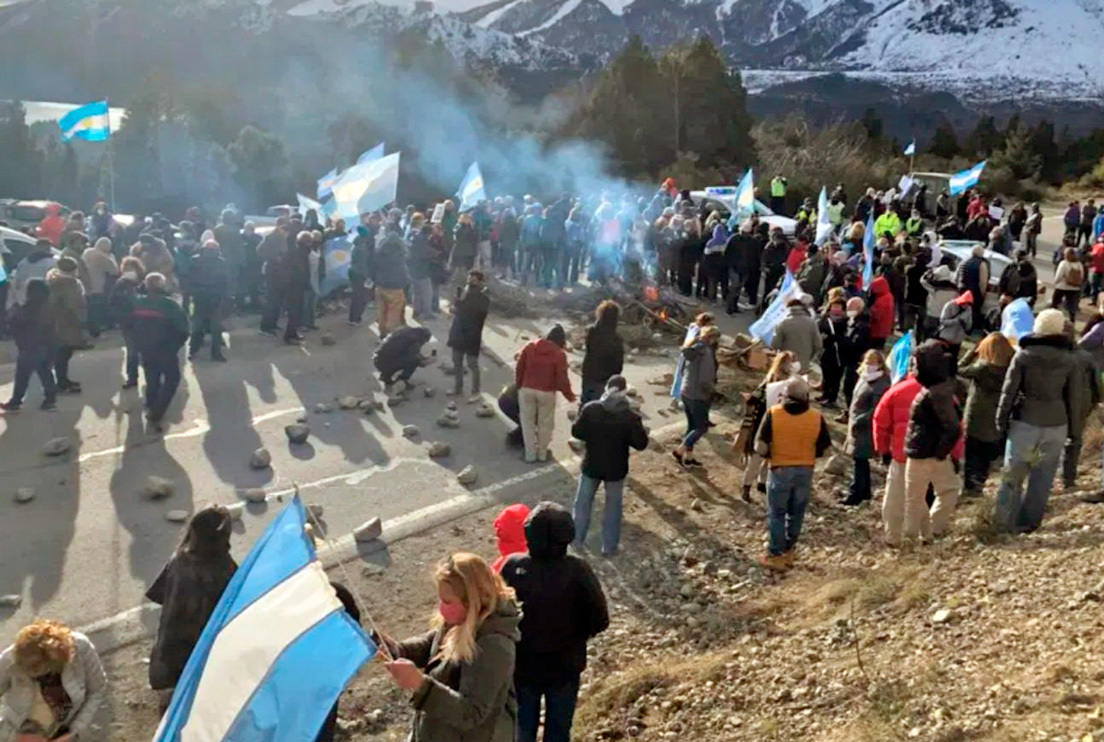
The Mapuche conflict reappeared on the Argentine agenda in the midst of a political confrontation over the disposition of disputed lands and the possible response of the State to the ancestral proclamations: to recognize territories for the communities or to carry out evictions at the hands of the forces of order. , That is the question.
In the south of the country, in Patagonia, the beautiful town of Villa Mascardi has been attracting attention for days, being a hidden jurisdiction in the province of Río Negro, just 35 kilometers from the tourist city of Bariloche. Indeed, that town full of snow-capped mountains, with a postcard-worthy lake, green nature and its typical dry climate, is the scene of the crusade that confronts a group of indigenous roots with neighbors "in defense of private property "Governors and, of course, the Police.
What's going on?
There, for three years the Lafken Winkul Mapu community has occupied some hectares of the well-known Nahuel Huapi National Park, which it claims as its own. It is the same place where the young Rafael Nahuel, 'Rafita', a 21-year-old Mapuche who, according to the autopsy, died from a bullet from the Prefecture, was murdered in 2017. That situation wanted to be disguised as a "confrontation" by the Government of Mauricio Macri, and Justice has not yet issued a final sentence against the prefect involved. Likewise, due to the commotion generated at the time, the eviction did not prosper, and in 2019 Peronism arrived at the Presidency.
Time passed, but not tension. That group remained firmly in place, increasing the discomfort around them. The boiling point came last Saturday, when dozens of people with Argentine flags arrived in their vehicles on Route 40, which connects almost the entire south, to protest and repudiate the indigenous people. They called it the "Patriotic Flag." These villagers claimed to be victims of arson attacks, as well as stones against homes and private cars.
For her part, the provincial governor, who cannot send uniformed men to the national park to expel those Mapuches, asked the Government of Alberto Fernández to act immediately. However, the Minister of Security, Sabina Frederic, an anthropologist with a discourse against the 'strong hand', not only refused to intercede, considering that this is a political-territorial conflict that exceeds her portfolio, but the Ministry itself launched a criminal complaint against the protesters. The argument? The carrying of weapons would have been encouraged, "with the intention of generating and producing acts of violence." In fact, the Mapuche community points out that there were no more racist slogans.
Mascardi's situation is only a reflection of what is happening in other areas of the province. In El Bolsón, recognized by many as the 'hippie town' of the south, some 140 families linked to aboriginal culture settled on another disputed land. This caused tirades from the mayor, who publicly accused them of having alleged real estate purposes, such as the illegal sale of valuable land. There were also small neighborhood protests, wearing another large albiceleste flag.
The vision of the Mapuche Parliament
In the last hours, hegemonic media launched special publications on the subject, reviewing all the attacks on private property in the area, attributed to the aforementioned Mapuche community. However, none of them consulted the aboriginal groups, to give their version of the problem or, at least, to know their historical claim. They even questioned their status as Mapuches, arguing that the State does not recognize them as such and that the other communities do not accept the Lafken Winkul Mapu group, from Villa Mascardi.
In the Mapuche Parliament of Río Negro they have a completely opposite view. This representative organization, born in the 1980s, serves as a link between the provincial state and aboriginal groups, which is key for a jurisdiction that is home to at least 160 communities. The entity has four directors, who receive a salary from the public administration, but are appointed by the groups.
Orlando Carriqueo, spokesman for the Mapuche Parliament in Río Negro
https://actualidad.rt.com/actualidad/365175-conflicto-mapuche-estado-argentino-reaparecer

No comments:
Post a Comment