Showing posts with label Panspermia. Show all posts

Sunday, March 22, 2020


A theory that seems far-fetched but it may explain a few things about life and the possible contribution of microbes that may regularly arrive to earth hitchhiking meteorites

The coronavirus may have come from space according to  N. Chandra Wickramasinghe and Edward J. Steele 
With a new corona virus making the headlines and causing personal distress to many and extending its realm of havoc into the financial and business world the truest cause of this and other similar pandemics needs to be honestly explored. The main facts relating to the onset and spread of this pandemic can be summarised as follows: • On October 11 2019 a meteoritic bolide (probably fragment of a comet) explodes in a brief flash in Nth East China. We think it probable that this bolide contained embedded within it a monoculture of infective nCoV-2019 virus particles that survived in the interior of the incandescent meteor seen in Fig 1. From the broad range of arguments we shall develop later on in the article we consider the seemingly outrageous possibility (no doubt outrageous to many readers) that literally hundreds of trillions of infective viral particles were then released embedded in the form of fine carbonaceous dust from the flash-exploded bolide. 
In late November to early December 2019 first human cases nCoV-2019 appear in the Wuhan region and environs (by all accounts unrelated to Wuhan meat and seafood market). • 
Isolates of virus now studied in many laboratories show very low or no mutation indicating that the incoming virus is essentially a “monoculture”. This is dramatically different to the picture one gets if the main spread of the virus was through affected victims replicating the virus and spreading copies which inevitably would show mutations over a broad sample of isolates. Everyone in the Wuhan region would have been exposed to essentially the same virus (including many animals , such as mammals, snakes and even perhaps vegetation) • Unsubstantiated claims that people pass on the virus to others without, or before, they show any symptoms implies a very strange pattern of epidemiological behaviour forcing difficulties with the straight forward infective model of human-to-human transmission. On the other hand the meteorite hypothesis is consistent with a wide regional “environmental” contamination which may include clothes, hair, cars, side-walks, trees, grassland, surface water pools and water reservoirs. • From a crude look at the evidence it is amply clear that human-to -human transmission might have occurred yet it is low or difficult or confined to intimate family contacts. In the latter instance the contact transfer model is somewhat confused by the fact these intimate social units may have shared or sampled the same infected space. • A very wide area in China is “suspect” and this area is now quarantined – an operation that would probably have been done rationally based on Chinese government sampling for nCoV-2019 RNA sequences. The strong localisation within China is the most remarkable aspect of the disease, the first cases of which probably began to show up from November 2019 onward. The fatalities reported so far appears to be confined to individuals, particularly the elderly, with underlying health problems, and the death toll so far is said to be less than the thousands who have died in the US in the past 3 months from seasonal influenza. Links of this outbreak to a Wuhan wild life market have been highlighted, but detailed studies conducted thus far have not seriously strengthened the case. It appears that a range of wild animals including bats and snakes had become host species for a very similar corona virus but a causal connection again does not hold up to rational scrutiny. ( Our full scientific analysis of the data with our colleagues is in our letter submitted to The Lancet. The text can be found at viXra.org site viXra:2002.0039 at http://viXra.org/abs/2002.0039?ref=11076818) Readers would need to be reminded that a fireball of the kind shown in Fig. 1 is a meteoroid probably many tens of metres across. Although larger fragments meteorites would fall to the ground almost at once, micron-sized dust released in the troposphere above China would take several weeks to drift to the ground. If these particles became the nuclei of rain drops the transfer to ground level as rain and mist could be protracted and last many weeks. Such a line of thinking might sound bizarre to the uninitiated reader, but not so to anyone who has elected to take an objective view of the rapidly accumulating body of evidence to support the theory that life (all living forms on Earth) have an external origin – the theory known by the name “Panspermia”. Panspermia – an idea originally discussed by the pre-Socratic Geek philosopher Anaxoragas in the 5th century BC - challenges the idea that life originated de novo on the Earth. This theory refutes the idea of Spontaneous Generation as first enunciated by Aristotle in the 3rd century BC, and revived in the 20th century in the form of the primordial soup theory. Despite over 50 years of experiments in numerous laboratories there is no evidence to support this theory, and a large body of scientific evidence from biology, geology and astronomy actually contradicts it main tenets. The support for the alternative view that life is a cosmic phenomenon stems mainly from the fact that the information content of life at a genetic and molecular level is super-astronomical; and this needs at least an astronomical or cosmological setting. Thus, the idea is that life’s information, now locked largely in the form of bacteria and viruses, are everywhere in space being carried mainly in comets. Comets have radioactive heat sources in the interiors and serve as both distributors and amplifiers of cosmic life – bacteria and viruses. The panorama of life on Earth is the result of the assembly of such bacterial and viral genes that has come to be assembled like pieces of a gigantic jig-saw puzzle over some 4.2 billion years. Whenever a planet on which cosmic life has become established is struck by asteroid and comet impacts some of this life is of course destroyed – as happened for instance 65 million years ago with the extinction of the dinosaurs on Earth. But a small and significant fraction of the resident life on the planet is actually blasted off into space and would survive space travel to seed a nearby habitable planet. It is only relatively recently that scientists have been able to fully grasp the enormous magnitude of the microbial and viral content of the terrestrial biosphere. We now know that a typical litre of surface seawater contains at least 10 billion microbes as well as some 100 billion viruses—the vast majority of which remain unidentified and uncharacterized to date (https://www.the-scientist.com/features/an-ocean-of-viruses39112?archived_content=9BmGYHLCH6vLGNdd9YzYFAqV8S3Xw3L5). Two years ago an international group of scientists collected bacteria and viruses that fell through the rarefied atmosphere near the 4000 metre peaks of the Sierra Nevada mountains of Spain. They arrived at an astonishing tally of some 800 million viruses per square metre per day and an associated slightly smaller tally of bacteria - all of which would of course ultimately fall to the Earth’s surface (eg. Reported in https://www.nytimes.com/2018/04/13/science/virosphere-evolution.html). The assumption normally made is that all such viruses and bacteria necessarily originate on the Earth’s surface and are swept upwards in air currents; but in such a model many difficulties associated with the upward transport process are ignored. In our view, a significant fraction of this vast number of falling microbes must originate outside the terrestrial biosphere and come from cometary sources – viruses and bacteria that are actually expelled from comets. Further supportive evidence for this point of view has come from sampling the stratosphere for its bacterial content. From a sampling of the stratosphere at a height of 41 km, using balloon borne equipment which was carried out in 2001, we already arrived at an estimated input from this height of 20-200 million bacteria per square metre per day, and 10 to 100 times more viruses, falling downwards to the Earth. If we take into account all the facts available to date we cannot avoid the conclusion that vast numbers of bacteria and viruses continue to fall through the Earth’s atmosphere, and it seems inevitable that a significant fraction is of external origin. We are also beginning to get hard evidence pointing to the first signs of bacterial life being lodged in rocks that formed 4.2-4.3 billion years ago when the Earth was being relentlessly bombarded by comets. The strong indications are that comets carried the first bacteria to our planet at this time, and moreover that the entire subsequent evolution of life on Earth took place against the backdrop of comets regularly introducing new genes. Comets have been regarded with awe and trepidation in many ancient cultures of the world. Almost without exception they have been regarded as bad omens – bringers of pestilence and death. The evidence for comets being implicated in the origin of life on Earth was intensely controversial when these ideas were first discussed by one of us and the late Sir Fred Hoyle. Now there is a growing consensus that this is inevitable in some form. In this article we argue that even today the periodic influx of cometary dust and debris could be responsible for waves of epidemic disease – such as the recent corona virus - that sweep our planet from time to time. As a life-bearing comets makes its repeated orbits around the sun its volatile substances are progressively vaporised and eventually we end up with what could be recognised as large carbonaceous meteorites. The number of close perihelion passages that a comet can survive before becoming completely stripped of volatiles is probably a few hundred. Carbonaceous chondrites could represent materials from comets denuded of volatiles but retaining a residue of silicates and more refractory organic structures. From time to time such objects find ingress into the Earth.
Reference:
https://www.academia.edu/42041228/Comments_on_the_Origin_and_Spread_of_the_2019_Coronavirus


Monday, September 16, 2019

About panspermia

Extracted from Inverview  of Fred Hoyle by Brig Klyce

source panspermia.org.

Early Biological Influences

One fortunate aspect is that my father was a direct believer in Darwin's theory. He used to tell me it was a wonderful thing, the greatest thing in science. I would say no, Newton is the greatest thing in science. He would try to explain to me Darwin's idea because he was an uneducated man — self educated I should say. Maybe he didn't do too good a job. And so, I started by thinking this is a lot of bunkum, you see, at the age of 12 or so. I just didn't believe it. I knew a lot about — I had been brought up in the country and I knew all the flowers and all this sort of stuff. And I just did not believe it.
At Cambridge I made friends with an Irishman from the north, George Carson. He had come over from the University there to do a Ph.D. in Botany here. Later when I was a research student — you didn't live in college in those days, you lived in the town. People let out rooms to advanced students, maybe 2 students. It was better if the chap you roomed with was some one you knew and got along well with. The chap I roomed with was Carson. He had just got a job.
George was a very skeptical about Darwin's theory. He always had the view that if he did the right mathematics, it would be revealed to you what was wrong with it. George always had this suspicion. But these were just biasing seeds, as it were. At that time, I never got into panspermia, in fact, didn't believe it at all. I thought it was a lot of nonsense all through the years. Until in 1975 — that's when I got involved....

From Grains to Bacteria

...Because what happened was that I put Chandra on to the problem of what the interstellar grains are and understanding their properties. And all through the sixties we thought we were doing quite well, but it was like Kepler's analysis of the motion of Mars. He had proved Copernicus's theory quite substantially, but it still was not really based on the best observations. There were small discrepancies. Eventually he became dissatisfied with these small discrepancies and it was then that he decided that instead of fitting the observations and theory, see what the observations really implied for the shape of the orbits. He would look at it that way round — observation first. Then he decided that it was an ellipse. Starting with the observations was the correct way. Chandra did the same thing. We would calculate all manner of models with different properties. There would always be decrepancies in what should have been a very simple problem — something you could calculate exactly using a digital computer.
I was working in the States in seventy-four. When I left to go there, I was under the impression that what we had done in the way of graphite particles and silicates was giving adequate results. When I came back to England there was a conference and Chandra said to me, "I'm doing to better to remove those small discrepancies if the particles are organic." That was the line of research he had pursued during the year I was away. He was adding the infrared information which we hadn't had before. At that time, we tried to fit the infrared. I discussed it. I didn't know if he was right or not. I made an unguarded remark — I said, "But Chandra, if the interstellar material is organic, if that is true, then, there is so much of it that this will be better precursor material for biology than to do it on the earth in Urey-Miller fashion." That was the unguarded remark. That set him off and then he must have looked through hundreds and hundreds of spectra to fit the infrared data among organics. And then quite suddenly as soon as he moved to biological specimens, that fit it better than anything else.
That was the history until one evening, I had been out walking in the hills and settled in front of the fire for coffee after dinner. By now he had started sending me books from the Cardiff Library. I was checking through this book and I came on the page of a diagram, a drawing of a bacteria that had been dried out. The worst source of discrepancies in our calculation was that the particle — we had always been taking them as solid, not as hollow. We discovered that if the particles are seventy percent hollow, most of our difficulties immediately disappeared. It wasn't so much a question of composition as of being hollow. That was the key point. We had never been able to remove the "knee" in the curve of the visual stuff. Lots of things we tried to adjust. It didn't do much good. It turned out it really didn't matter. They were irrelevant parameters. The key thing was to get it hollow. In other words, to get the average index of refraction low. Well — the page I discovered of the bacterium being dried out — we reproduced it from time to time. It shows that, cell walls being very strong, they don't shrivel at all. The bacterium maintains its outer envelope — this is important — with the space enveloped. And then I looked to see how much space is enveloped and the space is seventy percent. So it was from there I switched round.
So I said let's calculate. Let's get a size distribution. Use the size distribution for bacteria because we don't have to assume it, we can look in the books and see what it is, and use what it is. We know nothing about bacteria at this point, until we talked to somebody who gave us routine information. Then Chandra discovers, to his horror, that there are a million species of bacteria, and this is not do-able. He can't count a million. So we have to specify some restriction and we finally decided to keep it to spore-forming bacteria — that didn't seem to be a problem that related to the sizes and so he was able to count those. By now he had a program for his computer which, as soon as he fed it the relevant physical information of the size distribution, within an hour he had the answer. He simply called me three days later and said, "I've got a perfect fit."
It's my nature — I recognize that it must be an accident in my upbringing and the turn of the century when I was at the university — I just go from observation. I don't say, "It's absurd that there should be bacteria in space." I don't say that. It fits the observation, so it's the best theory we have. I don't care if it's absurd. So I didn't hesitate to publish it. That of course was the beginning of the disaster, the ridiculous. [With irony, of those who ridiculed the finding:] They know! They're born to know that the particles in space are not bacteria. God has told them.

Thursday, July 4, 2019

Panspermia and the Comet 67P

It's a radical explanation for Comet 67P's features.

There could be extraterrestrial life on Comet 67P/Churyumov-Gerasimenko, the target of the European Space Agency's Rosetta orbiter. That's according to a couple of UK-based scientists who claim that features on the comet's surface could be explained by microorganisms beneath the crust.
It's a radical view, and a controversial one, but astrobiologists Max Wallis from the University of Cardiff and Chandra Wickramasinghe, director of the Buckingham Center for Astrobiology, claim data from the Rosetta mission backs up their theory that the comet could harbour some form of life. "That's the conclusion that we've come to," said Wickramasinghe in a phone call.
He argues that comets could transport life through the galaxy, a theory that would have great implications for our origins and the nature of biology. "The implications would be that life is a truly cosmic phenomenon, not restricted to the Earth," Wickramasinghe said.
The European Space Agency's Rosetta spacecraft has been chasing Comet 67P for years, and made headlines last year when it began to orbit the comet and successfully sent a lander, Philae, onto the surface.

A picture of the comet on 23 June. Image: ESA/Rosetta/NAVCAM
Data from the orbiter and lander's instruments is starting to be published and we're getting to know more about the rubber ducky-shaped comet. We've found organic compounds, and know that the dark surface of 67P is peppered with craters and fissures.
Wickramasinghe and Wallis' model proposes that biology under the icy surface of the comet could produce gases that push through cracks in the surface and replenish organic materials. In a phone call, Wickramasinghe compared the process to "rotting food in a can that pops out when the microbiology gets going and produces a lot of methane or other gases."
"The whole of the geometry of the comet, we have argued, is due to the processes of this kind," he said. The researchers published a paper relating to their theory in the Journal of Astrobiology and Outreach, and Wallis presented it today at the Royal Astonomical Society's National Astronomy Meeting in Wales.
They posit that the life in question would be a kind of extremophile—a tough organism that can survive extreme conditions. In the paper they write that, "While microorganisms probably require liquid water bodies for their early colonising of a comet, they can inhabit cracks in ice and sub-crustal snow, especially if they contain anti-freeze salts and biopolymers."
But it's not a widely accepted theory.
"I am unaware of it having much, if any support in the Rosetta community."
Matt Taylor, project scientist of ESA's Rosetta mission, said in an email that, "Given the radiation conditions and the very very low temperatures, well below -70 on sunlit surface, I don't see this as a possibility and it's not clear to me how much evidence there is backing up this claim."
He added that, "I am unaware of it having much, if any support in the Rosetta community," and that he "[takes] more credence from the plethora of papers coming from the mission from the hundreds of cometary scientists who have gone through the process of peer review of their results."
There are no instruments on Rosetta or Philae to expressly search for life, only organic materials.Wickramasinghe has worked on the idea that comets could harbour life for a long time. He collaborated with the late British astronomer Sir Fred Hoyle on a hypothesis of "panspermia," whereby life on Earth would have originated in space.
Wickramasinghe's previous attempts to provide evidence for panspermia of this kind haven't yet swayed scientific opinion.
A less controversial theory—one that's acknowledged as by ESA as something Rosetta could help uncover—is that comets like 67P could have brought molecules to Earth that acted as the "building blocks of life," rather than life itself: complex organic molecules that could have been precursors to amino acids and "seeded" life as we know it.
Wickramasinghe conceded that the proposal of life on 67P would be disputed by critics, but blamed what he called "a relic of pre-Copernican times" that favours the idea that life is centred on Earth.

Thursday, March 14, 2019

Hoyle and Wickramasinghe's Analysis of Interstellar Dust 

Almost always the men who achieve these fundamental inventions of a new paradigm have been either very young or very new to the field whose paradigm they change. — Thomas Kuhn
The astronomer Sir Fred Hoyle was born in Bingley, Yorkshire, England on June 24, 1915. He received a master's degree from Cambridge in 1939 and was elected Fellow, St. John's College, Cambridge in the same year. He rose to become Plumian Professor of Astrophysics and Natural Philosophy in 1958. He was a leading contributor in the discovery of how the elements from lithium to iron are synthesized inside stars. In 1997 he was awarded the Crafoord Prize by the the Swedish Academy in recognition of outstanding basic research in fields not covered by the Nobel prize.
Professor N. Chandra Wickramasinghe was born in Colombo, Sri Lanka, on January 20, 1939. He studied astrophysics at Cambridge, where he was a student of Hoyle's. He received his Ph.D. in 1963 and an Sc.D. in 1973, and served on the faculty at Cambridge. He later became a Professor of Applied Mathematics and Astronomy at the University College, Cardiff, Wales. He is an expert in the use of infrared astronomy to study interstellar matter.
These two scientists did not originally set out to prove that life comes from space. They were astronomers, not biologists. They were trying to identify the contents of interstellar dust by finding something that would match its infrared signature, or extinction spectrum. When they began working on this problem in the early 1960s, the standard theory was that the spectrum could be adequately explained by graphite grains. But an imperfect match between the theoretical and actual spectra, and an implausible account of the formation of the grains pushed Hoyle and Wickramasinghe to search elsewhere. In their work and others', molecules that are more closely related to biology began to enter the picture.
In 1968, polycyclic aromatic molecules were detected in interstellar dust (4). In 1972, convincing evidence that the dust contained porphyrins was obtained (5). Then in 1974, Wickramasinghe demonstrated that there are complex organic polymers, specifically molecules of "polyformaldehyde", in space (6). These molecules are closely related to cellulose, which is very abundant in biology. By 1975, Hoyle and Wickramasinghe were convinced that organic polymers were a substantial fraction of the dust. This line of thought was considered wildly speculative at that time. Now however, the idea that organic polymers in space are abundant and may be necessary for life is well accepted. Today we often see stories about things like vinegar among the stars (7), or "buckyballs" from space as "the seeds of life" (8). To that extent the scientific paradigm for the origin of life on Earth has already shifted.
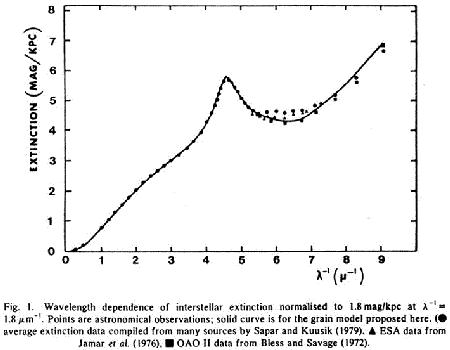
Graph of extinction spectrum of interstellar dust

But Hoyle and Wickramasinghe were not satisfied. In the middle 1970s, they turned their attention to an apparent anomaly in the spectrum. It had a low, broad "knee" centered at about 2.3 wavelengths per micrometer (the slight convexity on the slope at the left side of the graph above)  This spectral feature could be explained if the grains of dust were of a certain size, and translucent. After trying almost everything else first, in 1979, they looked at the spectrum for bacteria. Dried bacteria refract light as irregular hollow spheres, and their size range is appropriate. The match between the spectrum for dried bacteria (solid line) and the ones from the interstellar grains (dots, triangles and squares) was nearly perfect. Thinking without prejudice, Hoyle and Wickramasinghe concluded the grains probably were dried, frozen bacteria .

By Brig Kluce
From panspermia.org

Monday, December 31, 2018


The Astonishing Redness of Kuiper-Belt Objects.
Abstract:The recently reported extreme redness of a class of Kuiper-belt objects could be yet another indirect indication of extraterrestrial microbiology in the outer solar system.

Look not thou upon the wine when it is red, when it giveth his colour in the cup,…
At the last it biteth like a serpent, and stingeth like an adder. — Proverbs, xxiii. 31


The existence of an ancient reservoir of cometary-type objects in stable circular orbits lying beyond the orbit of Neptune is now beyond dispute. Tegler and Romanishen (1998) have recently made the remarkable discovery that these so-called Kuiper-belt objects include some that are exceedingly red. Accurate photometic studies using CCD techniques have revealed two distinct classes of such objects. One class is comprised of objects with surface colours that are only very slightly redder than the sun, whilst the other contains objects that are said to be "the reddest objects of the Solar System". The fact that the distribution of colour amongst these objects does not correlate with heliocentric distance indicates that the intensity of solar radiation does not play an important role in the colouring process.
The so-called reddest objects have a B-V colour excess relative to the Sun typically of ~ 0.65 mag, and a V-R colour excess of ~ 0.4. This implies that the ratio of reflectivity at the wavelengths 4500A and 6500A is
f = R(6500A)/R(4500A) » 2.5 (1)
Table 1 compares this value with reflectiviy ratios extracted from the data of Tholen et al. (1986) for a representative set of comets and D-type asteroids. From Table 1 we see that the surfaces of comets and asteroids fall significantly short of meeting the condition implied by (1). Table 2 sets out experimentally determined values of the same ratio f for several different types of laboratory materials (CRC Handbook of Chemistry and Physics, 54th ed., 1973; Larson and Fink, 1977). We note from here that some mineral surfaces could come close to satisfying (1), but by far the best candidates for producing redness are naturally occuring pigments as typified by the data for 'ripe pear' and 'ripe peach'.
Table 2 also includes data for irradiated hydrocarbon mixtures (Andronico et al., 1987). The relevant values of f range from 3.3 to 1, decreasing with increasingradiation dose beyond a certain point. Generally similar results are reported for irradiation with high-energy photons rather than nucleons. In all cases colours ranging from 'yellow' to 'brown' can be generated under carefully controlled conditions, and with precisely chosen cut-off values of radiation doses. On the basis of such laboratory data one could thus conclude that prolonged exposure to high-energy radiation, as occurs in interplanetary space, would lead eventually to the appearance of a grey or neutral colour. One might try to retrieve the case for radiation colouring by invoking meteorite and micrometeorite impacts. Such impacts, it could be said, arrests this greying process by continually exposing a pristine cometary surface that will be subject only to brief interludes of irradiation. But it is clear from Table 1 that the colours of real comets exposed to the interplanetary environment do not bear testimony to such an effect. Indeed Halley's comet and other long-period comets that spend most of their time in the outer regions of the solar system have mostly neutral colours, whilst the shortest period comets show reddening, albeit to a minor degree. From Table 2 it is clear that the reflectivity ratio given by (1) is consistent with the presence of highly absorptive organic chromophores (pigments) that have their absorption peaks distributed over green to red wavelengths.

Table 1
Reflectivity ratios for comets and asteroids
Object
Reflectivity Ratio,
R(6500A)/R(4500A)
Comets, period < 20 yr
1.26
Comets, period > 35 yr
1.11
P/Halley (Period 76yr)
1.00
D-type Asteroids(Mean)
1.16
Kuiper-Belt Red Class
2.50

Table 2
Reflectivity ratio, f , for laboratory systems
Laboratory system
Reflectivity Ratio,
R(6500A)/R(4500A)
Pyroxene
1.58
Olivine
1.63
Ripe pear
3.67
Ripe peach
4.15
Irradiated organics
3.30 decreasing with dose to 1.0

For many years the present authors have maintained that red colorations of planetary ices, for example the surface of Europa, could most plausibly be explained on the basis of biological pigments (Hoyle and Wickramasinghe, 1983, 1997; Hoover et al., 1986). Such pigments will be continually regenerated and brought up to the surface as long a biological activity persists. Suitable candidates for such pigmented microorganisms could be found among the Antarctic snow-ice algae Chlamydomonas, and diatoms. These organisms, which produce brownish and reddish colorations throughout the polar regions, might well serve as an analogue for the colours of icy bodies in the Kuiper belt. It may be relevant in the present context that diatoms are able to replicate and to carry out photosynthesis beneath an ice crust, operating at light levels of less than 1% that at the surface (Hoover et al., 1986).
We have argued elsewhere that radioactive heat sources present in primordial solar material would inevitably produce melting of ices in the interiors of comets (Hoyle and Wickramasinghe, 1983; Wallis and Wickramasinghe, 1992). The larger objects amongst the comets, giant comets with radii greater than, say 50km, may also be appropriate representations of Kuiper-belt objects. Such objects could retain interior lakes beneath an ice crust for timescales that may even exceed the age of the solar system. Anaerobic bacterial activity in subsurface lakes, leading to the build-up of high-pressure gas pockets, could cause sporadic cracking of an overlying ice layer. And this in turn leads to the transport of biological pigments to the surface.
The classes of red and grey Kuiper-belt objects discovered by Tegler and Romanishen could thus mark out a simple distinction between objects that are biologically active from those that are not. In objects where biological activity has ceased the red pigments would rapidly degrade to become grey.
References
*      Andronico, G., Baratta, G.A., Spinella, F. and Strazzulla, G.: 1987, Astonon.Astrophys 184, 49-51
+ CRC Handbook of Chemistry and Physics, 54th ed: CRC Press, 1973
+ Hoover, R. B., Hoyle, F., Wickramasinghe, N. C., Hoover, M. J. & Al-Mufti, S.: 1986, Earth, Moon, and Planets, 35, 19-45
+ Hoyle, F. and Wickramasinghe, N. C.: 1983, Living Comets, Univ Coll. Cardiff Press
+ Hoyle, F. and Wickramasinghe, N. C.: 1997, Life on Mars? The case for a cosmic heritage Clinical Press, Bristol
+ Larson, H.P. and Fink, U.: 1977, Applied Spectroscopy, 31, 386
+ Tegler, S. and Romanishin, W.: 1998, Nature, 392, 49-51
+ Tholen, D. J, Cruikshank, D. P, Hartman, W. K, Lark, N, Hammel, H. B. & Piscitelli, J. R.: 1986, Proc. 20th ESLAB Symposium on the Exploration of Halley's Comet, Heidelberg 27-31 October 1986, ESA SP-250, Vol . III, 503-507
+ Wallis, M.K. and Wickramasinghe, N.C.: The Observatory, 112, 228-234

Authors:  N.C. Wickramasinghe and F. Hoyle
School of Mathematics, Cardiff University
PO Box 926, Senghennydd Road
Cardiff CF2 4YH, UK 
From: panspermia.org
https://www.panspermia.org/kuiper.htm


Saturday, December 1, 2018


Comets, messengers of life


Comets are icy, Solar System bodies, generally with diameters of a few kilometers (1 to 30 kms) which, when passing close to the Sun, warm and release gases, a process called outgassing.
This produces a visible atmosphere or coma, and sometimes also a tail. These phenomena are due to the effects of solar radiation and the solar wind acting upon the nucleus of the comet. Comet nuclei range from a few hundred metres to tens of kilometres across and are composed of loose collections of ice, dust, and small rocky particles. The coma may be up to 15 times the Earth's diameter, while the tail may stretch one astronomical unit. If sufficiently bright, a comet may be seen from the Earth without the aid of a telescope and may subtend an arc of 30° (60 Moons) across the sky. Comets have been observed and recorded since ancient times by many cultures.
As of July 2018 there are 6,339 known comets, a number that is steadily increasing as they are discovered. However, this represents only a tiny fraction of the total potential comet population, as the reservoir of comet-like bodies in the outer Solar System (in the Oort cloud) is estimated to be one trillion (1,000,000,000,000).
The outer surfaces of cometary nuclei have a very low albedo, making them among the least reflective objects found in the Solar System. 

Comet nuclei with radii of up to 30 kilometres (19 mi) have been observed, but ascertaining their exact size is difficult.
The nucleus of the comet 322P/SOHO is probably only 100–200 metres (330–660 ft) in diameter. A lack of smaller comets being detected despite the increased sensitivity of instruments has led some to suggest that there is a real lack of comets smaller than 100 metres (330 ft) across.[27] Known comets have been estimated to have an average density of 0.6 g/cm3 (0.35 oz/cu in).[28] Because of their low mass, comet nuclei do not  become spherical under their own gravity and therefore have irregular shapes.

The objection that life can't survive in space needs examination. A serious problem for Svante Arrhenius's theory in 1908 was that spores in empty space would be subject to radiation damage, especially in the vicinity of a star. In 1978, Hoyle and Wickramasinghe observe in Lifecloud that if a cloud of bacterial matter were dense enough, the inner contents would be protected from radiation by the outer layers. Other scientists have recently observed that a coating of dust only half a micrometer thick would adequately protect a bacterium from ultraviolet radiation in space.
Hoyle and Wickramasinghe also discuss another means of space travel which solves the radiation problem: comets. And even before that danger was known, the idea that comets could contribute to life on Earth was afoot. Among others, Isaac Newton endorsed it. "Newton considered the continual arrival of cometary material to be essential for life on Earth".
Comets, as astronomer Fred Whipple figured out, are made largely of ice. Much of the ice in comets is frozen water, but ices of other compounds such as carbon monoxide and carbon dioxide are also present. And comets contain, we have recently learned, a large amount of more complex organic compounds. These organic compounds may be limited to a mixture of molecules such as the original Miller - Urey experiment was able to produce, or they may be even more closely related to life; we can't be sure from here, yet. In the interior of a comet, under layers of opaque organic material, viable cells would be shielded from radiation. Of course, freezing slows or stops metabolism, so cells could exist there in suspended animation.
A few larger comets such as Halley's comet have orbits that bring them as close to the sun as Earth is. Even fewer comets, called "sungrazers," actually strike the sun, or pass so close that they are destroyed by it. Most comets reside at distances far beyond that of Pluto, in orbits not confined to the plane in which the planets' orbits lie. They are so numerous that the total mass of comets in solar orbit may be as great as the total mass of the planets. Slight gravitational disturbances caused by the outer planets or neighboring stars can change a comet's orbit completely, steering some closer to the sun, others completely away.
When a comet nears the sun, some of its surface material ablates away, making the comet's "tail." This process usually begins somewhere between the orbits of Jupiter and Mars. Some of the discharged material is gas, some of it is dust. Each makes a different kind of cometary tail. Dust and larger debris left by comets remain for a while in solar orbit. Earth often passes through the orbits of cometary debris, causing meteor showers such as the Perseid meteor shower around August 10 every year, when we cross the orbit of comet Swift-Tuttle.
References.
panspermia.org and wikipedia

Tuesday, August 28, 2018


Panspermia: life everywhere in the Universe

Life on the Earth surface is very abundant. Both on the continents and in the oceans biological organisms have developed and flourished, even in the atmosphere microorganisms have been identified to the higher stratospheric levels.  Another biological realm that has been observed during the last decades is situated in underground environments. In the bottom of wells, boreholes, caves and mine galleries a myriad of microorganisms, particularly bacteria, can be found.
When we examine the possibility of life on the surface of other planetary bodies we realize that they are all quite different from those on the earth, temperatures may be too hot (Venus) or too cold (i.e. Mars, most asteroids and satellites of the gas giant planets) the atmospheres may be absent or have a composition not amenable with life.
Howevere, the subsurface conditions within many planetary bodies may be similar to ours.
The relationship of pressure and temperature with depth will, of course, be different, but the chances of life having developed at some depth may be not too different from those here. Hydrocarbons (methane and others) have been spectroscopically detected on the surfaces and in the atmospheres of many of these bodies, and subsurface liquid water can be expected within most of them (water appears to have been plentiful in the circumsolar cloud that formed the planets, and ice has been identified on several other planetary bodies and comets that are colder than the earth). The rocks, like those of the earth, should contain some oxi-dized components that will serve as oxygen donors. The scene would thus be set for the existence of microbiology there.
Mars would be the least expensive planetary body to investigate for evidence of subsurface extraterrestrial life, because we might not need to launch any spacecraft to begin such an effort. Meteorites that occasionally fall to earth bear the chemical signature of Mars. Several meteorites collected from the ice fields of Antarctica appear to have come from Mars. Trace element ratios such as the sequence of noble gases from neon to xenon, as well as the rather unusual nitrogen isotope ratio of the Martian atmosphere, were measured by the earlier Viking landing craft, and very similar values for these quantities show up in these meteorites. It seems very unlikely that debris from any other body would match these quantities so closely. Millions of years after an impact on Mars caused the ejection of Martian material, the orbits of some of these ejecta led to collisions with the earth. In 1996, one such meteorite (denoted ALH84001) yielded strong evidence that the rock had been altered by microbial life while still in the source planet.
We can extend this reasoning further. Probably the subsurface condition of several planetary satellites (i.el the Moon, Io, Ganymedes, Titan, Europa, Enceladus, etc) as well as of the largest asteroids (Ceres, Pallas),may be also similar and therefoere might have active organisms inside.
Even smaller bodies, like comets, may have these types of conditions , particularly when they approach the Sun.
A final conclusion is that these deep environments probably do exist in many, if not most planets of the galaxy.
Regarding these thoughts we would like to quote Fred Hoyle when he said “Life is a property of matter".
Partly adapted from "The Deep Hot Biosphere" of Thomas Gold,

Tuesday, August 7, 2018


Comets, life delivery cosmic systems
Comets are like cats. They have tails, and they do precisely what they want — David Levyç+

Comets, as astronomer Fred Whipple figured out, are made largely of ice. Much of the ice in comets is frozen water, but ices of other compounds such as carbon monoxide and carbon dioxide are also present. And comets contain, we have recently learned, a large amount of more complex organic compounds. These organic compounds may be limited to a mixture of molecules such as the original Miller - Urey experiment was able to produce, or they may be even more closely related to life; we can't be sure from here, yet. In the interior of a comet, under layers of opaque organic material, viable cells would be shielded from radiation. Of course, freezing slows or stops metabolism, so cells could exist there in suspended animation.
A few larger comets such as Halley's comet have orbits that bring them as close to the sun as Earth is. Even fewer comets, called "sungrazers," actually strike the sun, or pass so close that they are destroyed by it. Most comets reside at distances far beyond that of Pluto, in orbits not confined to the plane in which the planets' orbits lie. They are so numerous that the total mass of comets in solar orbit may be as great as the total mass of the planets. Slight gravitational disturbances caused by the outer planets or neighboring stars can change a comet's orbit completely, steering some closer to the sun, others completely away.
When a comet nears the sun, some of its surface material ablates away, making the comet's "tail." This process usually begins somewhere between the orbits of Jupiter and Mars. Some of the discharged material is gas, some of it is dust. Each makes a different kind of cometary tail. Dust and larger debris left by comets remain for a while in solar orbit. Earth often passes through the orbits of cometary debris, causing meteor showers such as the Perseid meteor shower around August 10 every year, when we cross the orbit of comet Swift-Tuttle.
Thousands of tons of cometary dust, debris and larger fragments fall to Earth every year. Starting in the late 1960's, U.S. military intelligence observers doing surveillance against enemy missile attacks began to observe and photograph comets and other objects as big as thirty to fifty meters in diameter exploding in the upper atmosphere. From 1975 to 1992, 136 such objects were observed — about eight per year. That information was kept classified until 1993-1994 (5.5). It's worth remembering that four billion years ago, when life on Earth first appeared, the number of comets nearing the sun was hundreds or thousands of times greater than it is now (6).
The study of comets today is rich with surprises. For example, comet Hyakutake, which was easily visible to the naked eye in March, 1996, was first discovered by a Japanese amateur astronomer using binoculars. Astronomers were surprised to learn "Hyakutake contains abundant ethane and methane, compounds never before confirmed in comets" (7-9). On March 27, 1997, NASA announced that a year-long study using Hubble and several Earth-based telescopes shows that the trace ices in the nucleus of comet Hale-Bopp are somehow segregated from water-ice. And on April 21, 1997, astronomers on the Canary Islands reported that Hale-Bopp has a third tail of a kind not seen before; it is composed of sodium gas (11). Following so many new findings, comet theorists are completely rethinking how comets are formed and what they contain. Perhaps in the process they should consider biological causes for some of the unexpected phenomena. For example, on Earth, ethane comes from methane, and methane is made from carbon dioxide by bacteria. This process could happen on comets as well.
Comets Reaching Earth
Many objects that fall into Earth's atmosphere from space are destroyed by heat before they reach Earth's surface. Only the very largest objects have enough momentum to penetrate the atmosphere without slowing down much. The largest comets are in this category. Imagine the fate of living cells deeply embedded in the ice of a large comet. The high heat requirement to melt ice, and water's extremely high heat of vaporization could offer some protection to the cells during a fast trip through the atmosphere. And landing in the ocean would soften the impact. Still, the heat generated by such explosions can be enormous.
Christopher Chyba, Paul Thomas, Leigh Brookshaw and Carl Sagan wrote a study of this problem, published in Science in 1990, entitled "Cometary Delivery of Organic Molecules to the Early Earth"  They carefully calculate the heat generated by high speed impacts with Earth, and then conclude that life's building blocks (not whole cells) could arrive intact. It is reasonable to extend their conclusion to cells, by expanding the scope of their study. Chyba and his coauthors in 1990 admittedly do not examine the case of a comet exploding before impact. However most comets, indeed most large meteoroids of any type except iron ones, would explode before impact. In 1992 Chyba and Sagan did address the explosion of comets in the atmosphere and found that for the delivery of intact organic compounds at least, this method of transfer was far more effective than comets that collide with the surface.
The best known atmospheric explosion of a meteoroid happened eight kilometers above Tunguska in central Siberia on June 30, 1908. The explosion flattened the forest for roughly 15 kilometers in every direction. The object was most likely an asteroid, perhaps 60 meters in diameter, because a comet would have exploded higher in the atmosphere. Our knowledge of this event is indirect because no one investigated the site until twenty years after the explosion. A similar atmospheric explosion, again over Siberia, occurred in 1947. We know that atmospheric explosions before impact by comets and asteroids are common. An explosion in the air would be much gentler than a collision with either Earth's hard surface or the ocean. Matter on the trailing side of a comet exploding in the atmosphere would be significantly slowed by the jolt. And matter located there would also be the best protected from the heat generated during atmospheric entry prior to the explosion.
In March 1965, an object estimated at 7 - 8 meters in diameter exploded 30 kilometers over Revelstoke, Canada. This time investigators arrived promptly and recovered many fragments a few millimeters in size. Most of these were not altered by heat, proving that a plausible delivery mechanism for cells exists .
In a new development, on May 28, 1997, NASA announced observations that comets as large as houses — "thousands per day" — actually break up and are destroyed at 600 to 15,000 miles above Earth. Dr. Lewis A. Frank, the principal investigator for NASA's Polar spacecraft instruments, described their descent as a "relatively gentle 'cosmic rain'." 
Reproduced from
http://www.panspermia.org/comets.htm

Wednesday, July 18, 2018


Context A (from the book "Peoples, Drugs and Serpents")

In the beginning it was the ice
“It started to take shape ... a spiritual being composed of wind, waves
and rains, whose essence was movement and whose body was
that of the snake. This snake lived in heaven, and his presence was
manifested everywhere ... in tornadoes, in the shapes of the clouds
and the winds. In the labyrinthine sheets of rain and streams ...
Sometimes this meandering genius of heaven fell on the earth
throwing tiny models itself with the rain. Old tiny snakes that they
slipped into the cracks of the earth and woke up the sleeping ls “1 .

Before she fell at high speed into the aqueous blue belly of that world, she had spent much time asleep in the ice, protected by a massive gray rock and dust covering.
It is difficult to know how much time elapsed since she left her ancient world on the other side of these stellar and gaseous worlds. The consciousness of time requires special complexity, at least within this stellar bulge in which she was traveling, In their old home there were other beings like her, elongated spirals of life nurtured by oceans and different, very old, very distant lakes.
May be she was not alone. Probably with her came also hundreds, thousands, millions of sisters also locked in their icy crusts.
In its elongated body she brought all the necessary information to reconstruct herself, to navigate, to create new daughters replicated from the old codes.
When the rain stopped and rock particles settled within the roaring waves of the great sea, she realized that she had arrived. The crust cracked and the ice melted. She was alive and well in her new home.
This new blue world was unknown, but it seemed as hospitable as her own.
Little by little her rock-uterus was getting smaller. Finally she was able to drift, to move in this blue unknown world, but that it looked as hospitable as her own.
Some, perhaps many of her sisters had also fallen there. They also were looking unhurried, for the necessary heat, the lights, the food for their growth and replication.
After a while, the tiny celestial serpents, had spread throughout all the waters of the planet, oceans, the clouds, rivers, lakes, and dew.

Thursday, November 16, 2017

The astrophysicist who denied the Big Bang and supported the extraterrestrial origin of life


"The centenary of the birth of Fred Hoyle, a heterodox and highly creative scientist is celebrated
He never settled for the most widely accepted explanations and challenged many well-established theories.
The astronomer Rafael Bachiller shows us in this series the most spectacular phenomena of the Cosmos. Topics of pulsating research, astronomical adventures and scientific novelties about the Universe analyzed in depth.
The figure of Fred Hoyle (1915-2001) does not leave indifferent any contemporary astronomer. Researcher, professor and author of science fiction, Hoyle developed the theory of stellar nucleosynthesis and applied Einstein's equations to describe the universe. A heterodox scientist of enormous creativity, he never settled for the most widely accepted explanations and challenged, with original ideas, many well-established theories.
Prodigious intelligence
Fred Hoyle was born in Bingley (United Kingdom) on June 24, 1915. He was educated in Cambridge, where since childhood he proved to have a prodigious intelligence. From there he left at the end of 1940, in the middle of the world war, to go to work on radars in Portsmouth; there he met the physicists Hermann Bondi and Thomas Gold with whom he would later make several of his scientific works. This work also offered him the opportunity to travel to the US twice, where he was able to discuss with Caltech astronomers and the Monte Palomar Observatory, exchanges that turned out to be very inspiring for his subsequent work on nucelosynthesis.

Fred Hoyle in his maturity.
In 1945, once the war was over, Hoyle returned to Cambridge and at his university he would enjoy his most scientifically productive years. In 1967 he founded the prestigious Institute of Astronomy of Cambridge (then called Institute of Theoretical Astronomy), of which he would be its first director. In 1971 he was appointed president of the Royal Astronomical Society and in 1972 Knight of the British Empire ('Sir').
But in 1973 he resigned from his position as director of the Institute of Astronomy, remaining without stable salary and disconnected from the world of official astronomy. It was then that he moved to the Lake District, in northwest England, and devoted himself to writing books (many of them science fiction) and exploring heterodox ideas, most of which have been rejected by official science. On November 24, 1997 he suffered a fall during a country trip that had serious effects on his physical and intellectual state. He died on August 20, 2001 after a stroke in Bournemouth.
Nucleosynthesis
In 1946, Hoyle showed that the nuclei of stars can reach temperatures of billions of degrees, much higher than those that are required to trigger nuclear reactions, and that at those temperatures, the balance between nuclear processes should lead to a great abundance of carbon and iron, as observed in nature. He also identified the nuclear reactions that create the elements of the periodic table that lie between carbon and iron, and proposed that some of the precise reactions to create the heavier elements only happened when the stars exploded in the form of supernovas. These works gave birth to an entire astrophysical discipline, nucleosynthesis, which explains the origin of heavier elements than helium from different nuclear reactions.
Big Bang Challenge
Hoyle never agreed with the theory developed by George Lemaître about the expansion of the Universe. Although this theory was verified experimentally shortly after by Hubble, confirmed that the universe had an origin, Hoyle referred to all this as if it were pseudoscience. In a broadcast of the BBC in 1949 he referred for the first time to this theory, with a clear pejorative intention, with the term 'Big Bang'. I could not think at that moment that, with this ironic comment, I was coining the world-popular designation to that theory to which I would dedicate so much trying to refute it.

Mosaic with Hoyle in the National Gallery, London. | Boris Anrep
The British astronomer was a defender of his "theory of the stationary universe" that tried to justify that the universe remained eternally identical to itself, without any change, that it had not had an origin, nor would it have an end. To ensure that the separation of the galaxies from each other, which had been observed by Hubble, did not cause a dilution of the universe, Hoyle was forced to assume that there was matter that was created continuously between the galaxies, giving rise to new galaxies that occupied the space that was emptied during the expansion.
Obviously this creation of matter proposed by Hoyle was no more plausible than the creation of the entire universe in a single Big Bang, but what made this last theory prevail over that of the stationary universe was the discovery of the cosmic microwave background in 1964, which is considered a relic of the great explosion. Although this cosmic background does not find an explanation in Hoyle's theory, he died in 2001 without having accepted the validity of the Big Bang theory.
Scientific controversies
Together with his Indian collaborator Chandra Wickramasinghe, Hoyle promoted the idea of ​​panspermia, arguing that the first forms of life came to Earth from space and that, thanks to comets, life can spread throughout the universe.
.
These two authors also attributed an extraterrestrial origin to some diseases such as polio, mad cow disease, AIDS and the Spanish flu pandemic of 1918. For example, in the case of the Spanish flu, they hypothesized that a comet had deposited the virus in different parts of the planet simultaneously, a hypothesis that was unanimously rejected by experts in the pandemic.
In 1982 they published the book 'Evolution from space' in which they argued that the probability of obtaining a cell was ridiculously small. According to a comparison that has become famous, the probability of obtaining a cell from a primordial chemical soup is as small as the probability that a tornado could create a Boeing 747 in a junkyard. From here, although Hoyle declared himself an atheist, he went on to defend a theory of the 'Intelligent Design' type according to which life must have been created by some superior intelligence.
Hoyle supported the theory of the inorganic origin of terrestrial hydrocarbons according to which oil is not a fossil deposit of biological origin, but arises from large carbon deposits existing on Earth from its origin, or arrived at our planet through impacts of comets or asteroids...." 
"The most famous work of science fiction written by Hoyle, 'The black cloud', relates the arrival of a huge cloud of gas to the solar system. By shielding sunlight, the cloud seems capable of ending life on Earth. Finally, the cloud is revealed as a superorganism much more intelligent than human beings. This story conquered all the readers of the time passionate about science.

Hoyle starred in several controversies surrounding the delivery of the Nobel Prizes. For example, in 1974 when Antony Hewish won the prize for the discovery of pulsars, Hoyle immediately pointed out that the real discoverer had been Jocelyn Bell, and not Hewish, her thesis director. According to some authors, these criticisms of the Nobel were the cause of never being awarded the prize to himself, although he was received in 1983 by his collaborator in the work of nucleosynthesis, the American Willy Fowler."

Rafael Bachiller
Reference: 
http://www.elmundo.es/ciencia/2015/06/24/558a71c4ca4741504f8b4575.html