The main
psychoactive plants
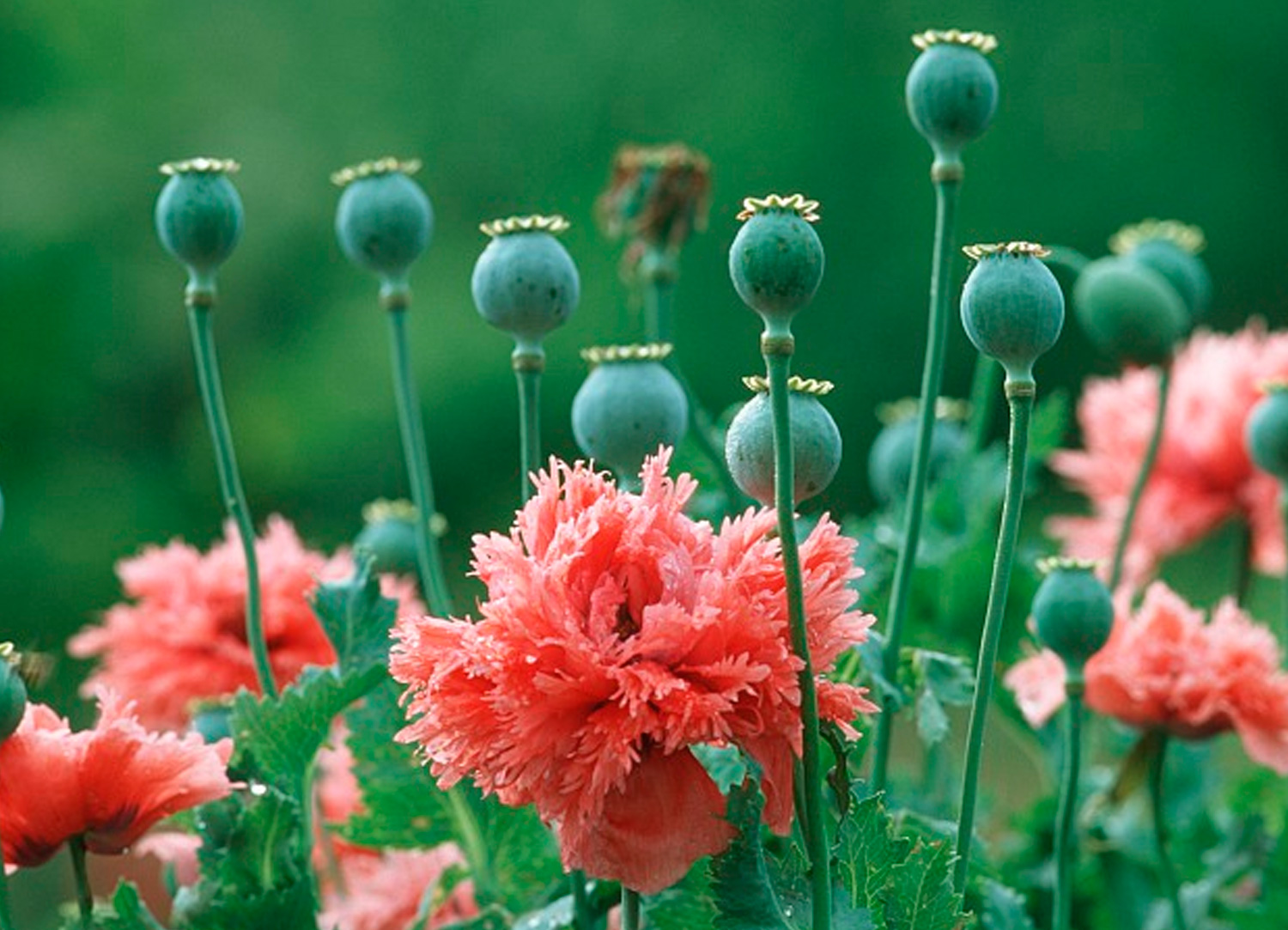
2. Hemp (Cannabis
sativa), also improperly called marijuana, is a shrubby plant, native to South
Asia, which possesses alkaloids with well-defined psychoactive properties. Hashish
is extracted from it and the flowers and leaves are used for smoking.
3. Peyote (Lophophora
williamsii) is a cactus whose most important active ingredient is mescaline. Peyote
grows in the arid zones of subtropical North America.
4. The
theonanacatl (Psilocybe mexicana and Stropharia cubensis) is made up of several
species of psychoactive fungi that grow in the mountains of Mesoamerica (Oaxaca,
Chiapas, Guatemala). They contain psilocybin and psilocin
5. The fly swatter (Amanita muscaria) is a
psychoactive mushroom that grows in the northern and temperate mountain forests
of Eurasia. Contains muscarine and muscimol.
6. Ayahuasca
is an infusion prepared from a vine that grows in the Amazon region. This vine,
called Banisteriopsis caapi, contains harmine13 (C13H12N2O), an alkaloid with
strong psychoactive properties.
7. The ergot
or ergot (Claviceps purpurea) is a fungus that parasitizes rye, wheat and other
grasses. It is strongly psychoactive. Its toxicity can be eliminated in its
preparation. Of Eurasian or North African origin. It contains several
psychoactive lysergic acid alkaloids, related to LSD-25 (d-lysergic acid
diethylamide), the well-known psychedelic synthetic compound.
8. The
ololiuhqui (Turbina corymbosa), also called "virgin seeds" is a vine
found in Mexico whose seeds have visionary properties. Like ergot, it contains
lysergic acid alkaloids, strongly psychoactive.
9. The
aguacolla, also called San Pedro or gigantón (Trichocereus pachanoi) is a large
cactus (5 to 8 meters high) that grows in the central and northwestern Andes of
South America (Ecuador, Peru). Contains mescaline.
10. Coca is
a shrub plant typical of the Andean foothills in South America whose leaves contain
numerous alkaloids, including cocaine.
11. Tobacco
is a native shrub of American origin cultivated in most native societies. It
has several alkaloids, mainly nicotine.
12. The
henbane (Hyoscyamus niger) is an herb of the nightshade family characteristic
of Europe and the Mediterranean region. It contains tropane alkaloids, in
particular hyoscyamine and scopolamine (with visionary properties).
13. Belladonna
(Atropa belladonna) is a herbaceous plant of the nightshade family, European
origin, contains several tropane alkaloids including hyoscyamine and
scopolamine.
14. The
mandrake (Mandragora officinarum) is a herbaceous-bearing nightshade plant of
European origin with thick and irregular roots with an anthropomorphic
appearance. With tropane alkaloids: hyoscyamine, scopolamine, atropine and
mandragorin.
15. The
iboga (Tabernanthe iboga) is a shrub from Central Africa whose roots are used
for its visionary properties. From the apocinaceae family, made up of shrubs
and trees characterized by its simple leaves, colorful flowers and a milky
juice. Contains ibogaine and 11 more indole-alkaloids.
16. The
Syrian rue (Peganum harmala) is a small shrub native to the desert areas of the
Eastern Mediterranean. Contains beta-carboline alkaloids such as harmine, harmaline,
and tetrahydro-harmine that have visionary properties.
17. The
toloache (Datura inoxia) is a perennial herb that can reach more than 1 m in
height that grows in Mexico. The root, the seeds and to a lesser extent the
leaves are used. Contains scopolamine and hyoscyamine.
Reproduced from the book "Peoples, Drugs
and Serpents" by D.Antón, Piriguazú Ediciones.

No comments:
Post a Comment